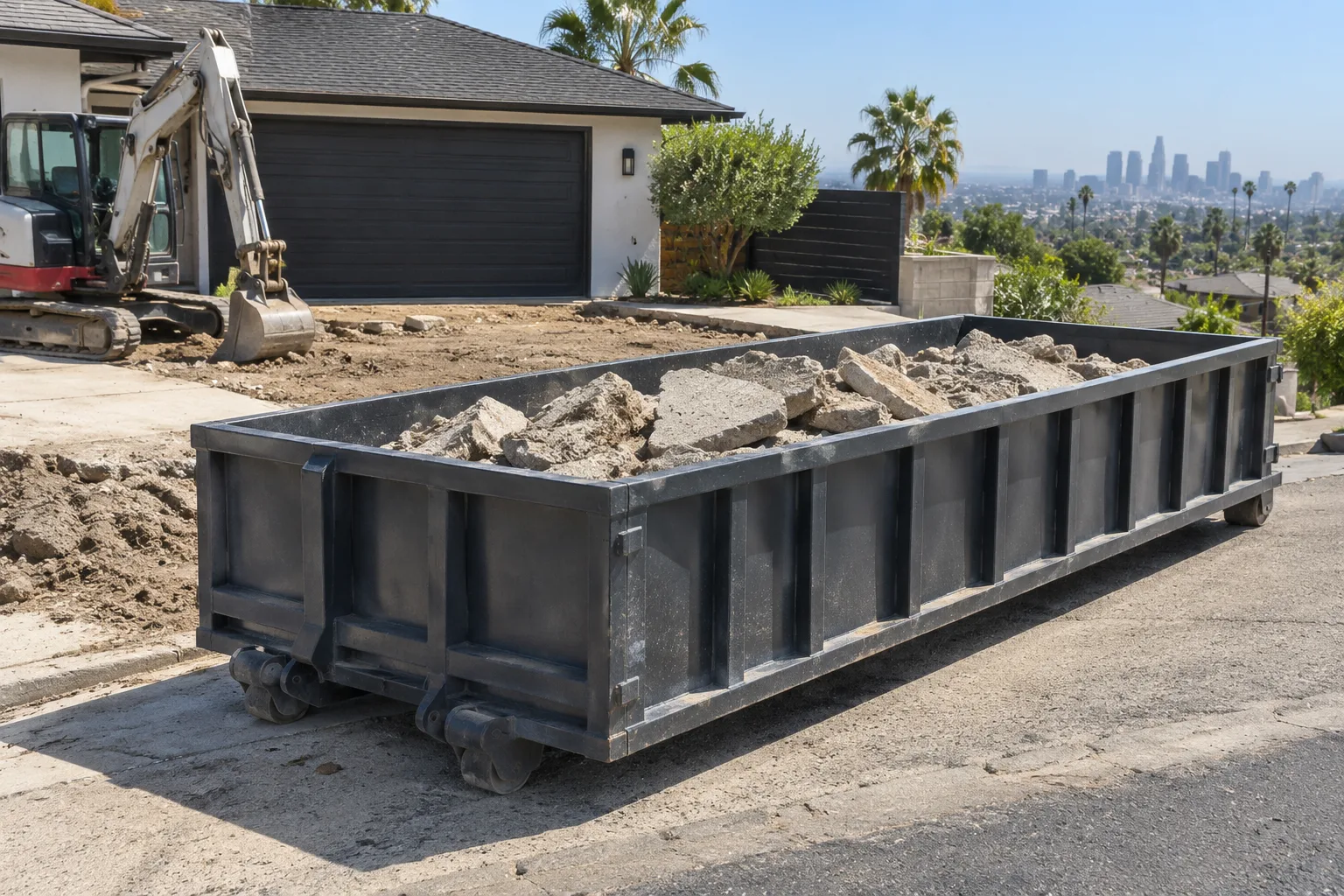
Do not order a general-purpose container and then fill it with concrete or soil. Tell the provider exactly what the load contains. Dense material can exceed equipment and road limits long before a tall container looks full.
Name the material accurately
“Concrete” may include rebar, tile, brick, plaster, asphalt, or soil. “Dirt” may include roots, sod, rock, trash, or contaminated material. Ask which materials may share a load and which must stay separate.
Estimate volume from dimensions
For a roughly rectangular area, record length, width, and average depth. Give those measurements to the provider rather than converting them to a container size yourself. Irregular excavation and broken concrete include air gaps and uneven pieces, so the provider still needs judgment.
| Material | Keep separate from | Describe |
|---|---|---|
| Concrete | Trash, wood, soil unless approved | Slab thickness, rebar, coatings |
| Dirt | Sod, roots, trash, concrete unless approved | Volume, moisture, known contamination |
| Brick or block | Mixed demolition unless approved | Solid or hollow, mortar, other debris |
Load low and evenly
Follow the provider’s heavy-material fill line. Spread the load instead of building one dense mound. Keep the area around the container clear so pickup equipment can approach without people working beside it.
Questions to ask
- Which exact materials are accepted?
- Must the load be clean and separated?
- What container and fill line apply?
- How is weight priced or limited?
- What surface and access does pickup require?
Continue with concrete and dirt dumpster rental planning.